Eros – Iros

Participating artists:
Io Angeli, Giannis Adamakis, Stelios Alexakis, Anna Achilleos, Christina Aktidi, Dimitris Andreadakis, Kostas Ananidas, Nektarios Aposporis, Chrysa Vergi, Alexis Veroukas, Eirini Vogiatzi, Marios Voutsinas, Andreas Georgiadis, Savvas Georgiadis, Maria Giannakaki, Maria Grigoriadi, Stefanos Daskalakis, Dikaia Despotaki, Giannis Dimitrakis, Tania Dimitrakopoulou, Maria Diakodimitriou, Frangiskos Doukakis, Konstantinos Esslin, Eirini Iliopoulou, Minas Kambitakis, Voula Karambatzaki, Dimitris Katsigiannis, Theofilos Katsipanos, Vasilis Liaouris, Michalis Madenis, Nektarios Mamais, Efi Manou, Tasos Mantzavinos, Christina Mantzavinou, Lydia Margaroni, Varvara Mavrakaki, Stella Meletopoulou, Tasos Misouras, Timos Batinakis, Giannis Bekiaris, Chariton Bekiaris, Panagiotis Beldekos, Georgia Bliatsou, Lambrini Boviatsou, Christos Pallantzas, Gefso Papadaki, Gefso Papadaki, Maria Pastra, Stelios Petroulakis, Giorgos Rorris, Giorgos Saltaferos, Dimitris Sarasitis, Marina Stellatou, Giorgos Taxidis, Antonis Titakis, Antonis Tsakiris, Eleftheria Tseiko, Katerina Tsembeli, Vaso Tringa, Virginia Filippousi, Maria Filopoulou, Pavlos Chambidis, Athina Chatzi, Aristidis Chrisanthopoulos.
Dear friends and colleagues,
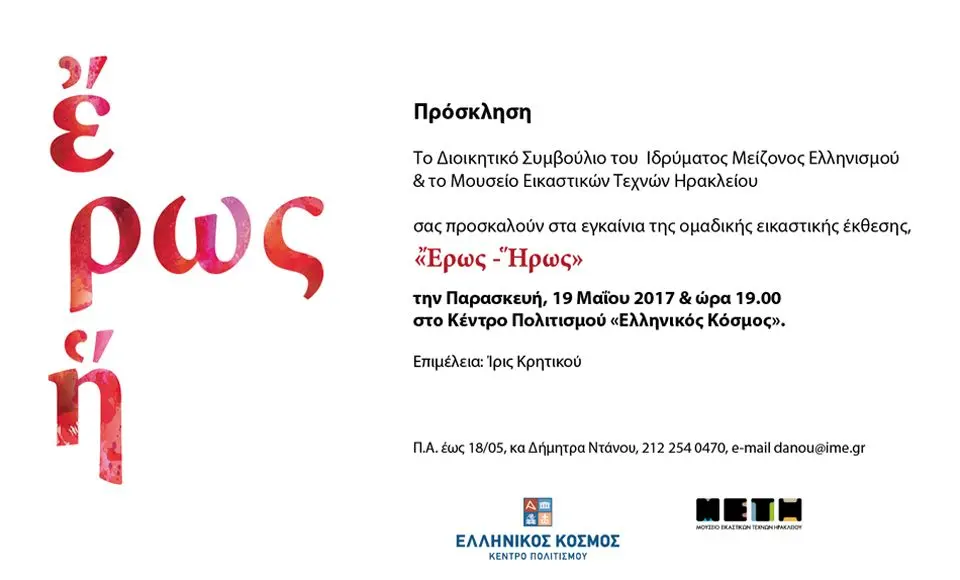
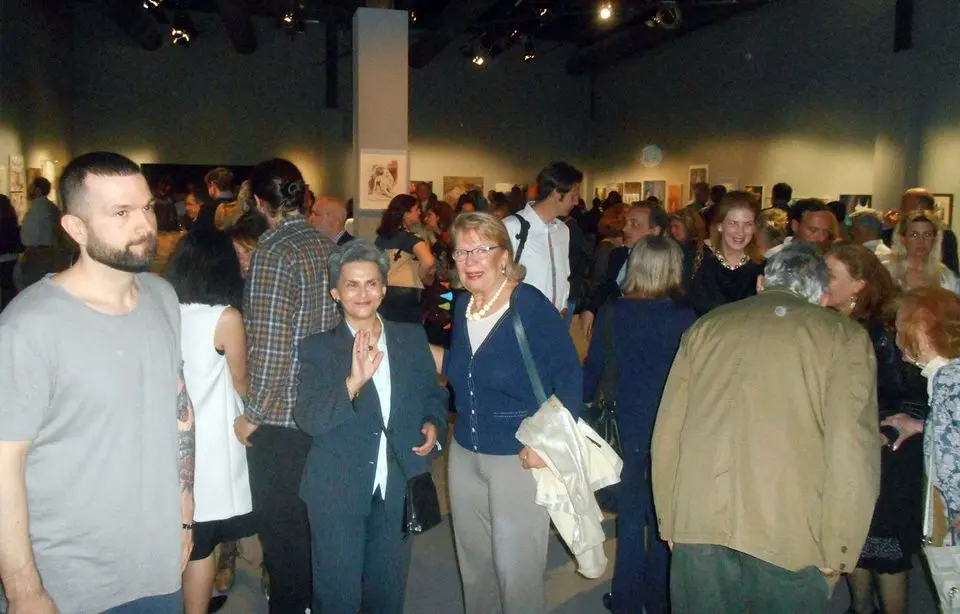
We are delighted to invite you to the group exhibition “Eros Iros” on Friday 19 May 2017 at 19:00, at the “Hellenic Cosmos” Cultural Centre of the Foundation of the Hellenic World.
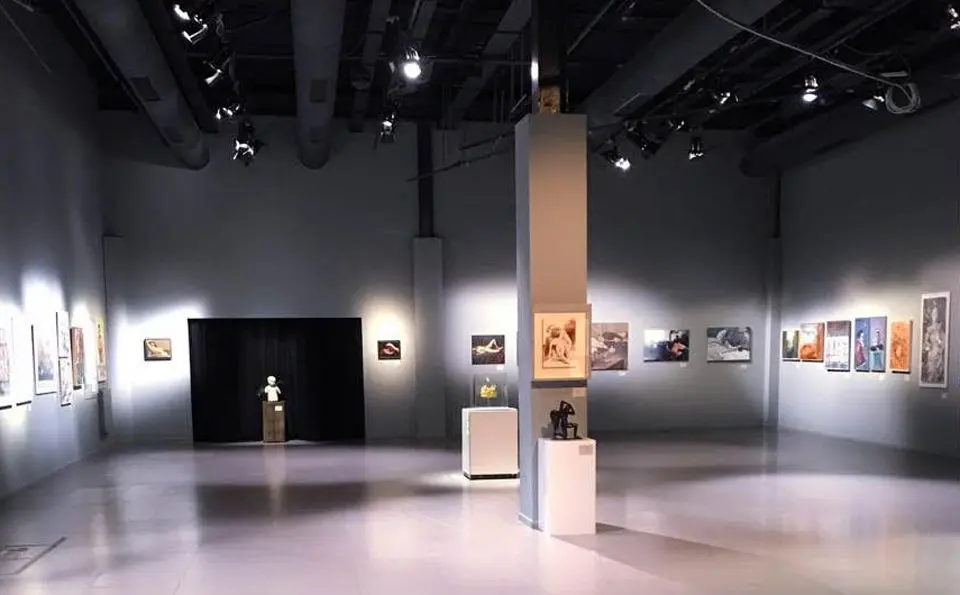
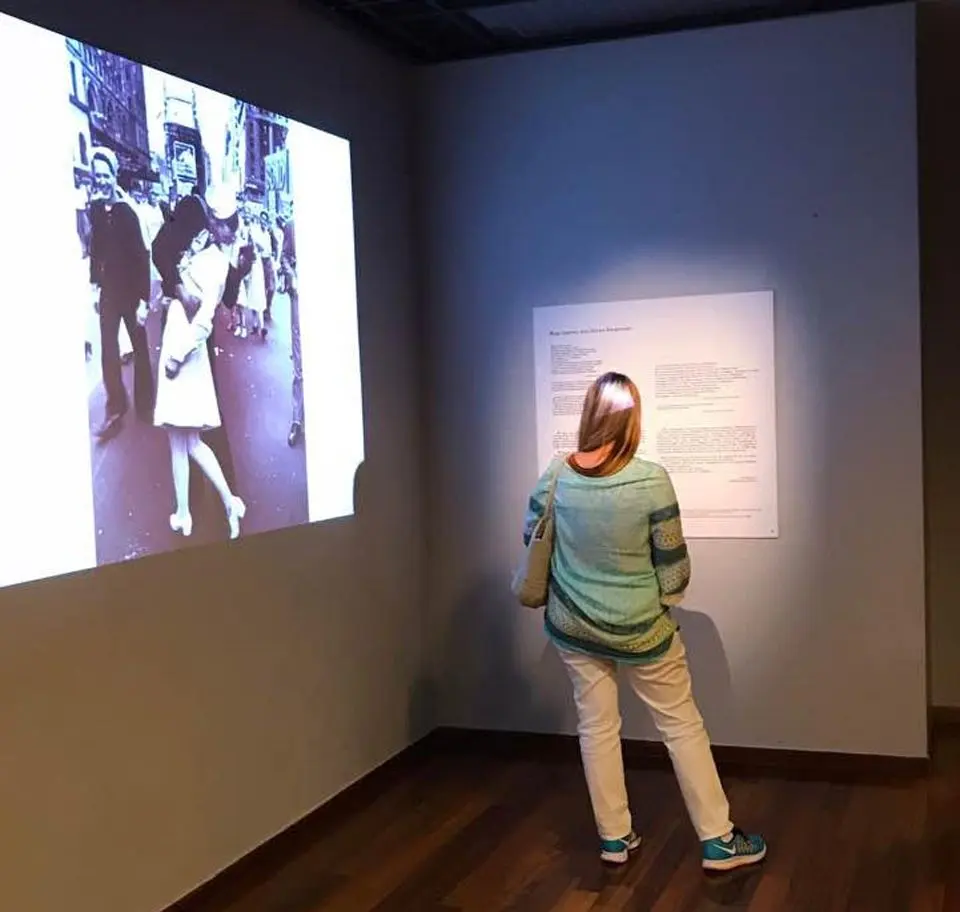
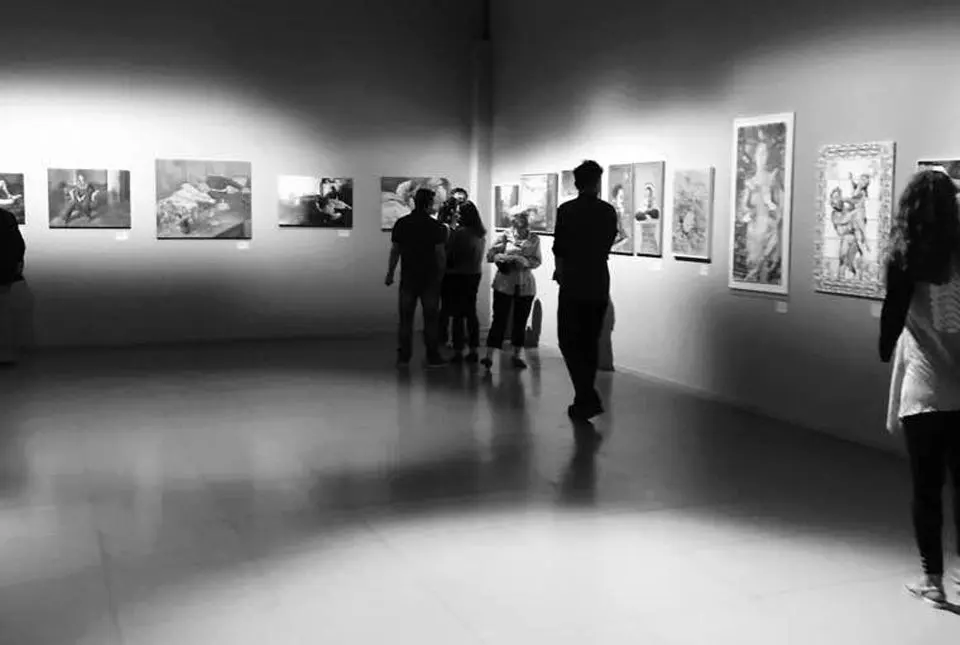
Through a wealth of works, the group exhibition “Eros Iros” presents Love and Desire in all their guises. After its successful first showing at the Museum of Visual Arts of Heraklion, organised by Kostis Schizakis, the exhibition will be hosted at “Hellenic Cosmos”, the cultural centre of the Foundation of the Hellenic World, opening a new cycle of collaborations.
Distinguished and emerging artists alike worked together to make the exhibition happen, creating new works or proposing earlier ones from their own or other collections.
With best wishes
Iris Kritikou
Of Love and Other Demons1
Love, unconquered in battle,
Love, you who fall upon men’s possessions,
who keep your night vigil on a young girl’s soft cheeks,
you roam over the sea and among the homesteads of the wild;
none of the immortals can escape you,
nor any of men, whose life lasts but a day,
and whoever has you is mad.
You wrench even the minds of the just to injustice, to their ruin;
it is you who have stirred up this strife between men of one blood;
and victory goes to the bright desire in the eyes of the lovely
bride, a desire enthroned in power beside the great
laws. For the goddess Aphrodite, whom none can fight, is at her play.
Sophocles, Antigone
Love neither comes into being suddenly and all at once, as anger does, nor passes quickly, though it is said to be winged; it is kindled gently and, as it were, melts its way in, and once it has touched the soul it stays there for a long time…
Plutarch
…the hour has passed quickly, midnight is drawing near
the moon has gone, and the Pleiades have set
and only I lie here, alone and forsaken
Love, who hands out torments,
Love, who weaves tales,
seized my soul and shook it
just as a wind from the mountains
sweeps raging into the oaks.
Sappho (rendered by Odysseas Elytis)2
…Why does he sleep? How does he keep awake? How does he stay stretched out like that? And no breath, no sigh leaves his lips, and his eye is fixed there, unwavering, and he lives and does not live, a life turned inward? What is he thinking? Is thought what is needed? No: action. To get up… To leap… To run… to fly… To climb the rock, step by step, up narrow lanes and over the cobbles… To reach the top… To pour out, to charge… To throw them into turmoil. To wreak havoc among them… To lay hands on the bride, who stands there in all her finery, so proud. ‘Come here, you!’… To snatch her… To lift her high… To carry her down, below the steps… they will vanish…
they will be left petrified… they will take him for a madman…
they will come to their senses… they will run after him…
Alexandros Papadiamantis, Eros Iros
…It is still early in this world, my love,
to speak of you and of me.
Odysseas Elytis, The Monogram
The idea for the exhibition “Eros Iros”, which was superbly organised and hosted by the Museum of Visual Arts of Heraklion and now continues its fine journey in Athens with the Foundation of the Hellenic World as its ideal co-organiser, was born one festive evening in a small Cretan taverna in Athens, which had itself borrowed its evocative name from Alexandros Papadiamantis’s short story of the same title.
The subject of the exhibition, however, is not Papadiamantis himself or his narrative world but, above all, the joy and the anguish, the longing and the immersion of the human being in the condition of love.
Eros – Iros, heroic love that triumphs and at the same time destroys human beings; that life-giving element which stirs and torments all creation; the “fairest of the gods” in Hesiod’s Theogony and the invincible Eros of Sophocles’ Antigone; the Platonic daimon – the highest form of madness, according to the great philosopher – and the laughing, mischievous child of the poet Meleager; sacred and profane desire, Apollonian and Dionysian love; Dante’s almighty love “that moves the sun and the other stars”; the forbidden love of Romeo and Juliet; Othello’s dark, jealous love and Lady Macbeth’s bloodthirsty love of power; the romantic, chivalric suffering of Tristan and Isolde; the unholy love of the nun Héloïse for the philosopher and teacher Abelard, and Giacomo Casanova’s “god of nature”; Stendhal’s vanity love and Schopenhauer’s inescapable trap; the triumphant love of Erotokritos and Aretousa and the desperate, suicidal love of Mimikos and Mary; the love of the immortal couples of dance and opera; misery and happiness together in Borges’s The Lover; Love in the Time of Cholera and, in Márquez, the love beyond death of a long head of flame-red hair; the world of Cavafy and the legacy of Tsarouchis in contemporary Greek painting; the suffering erotic body and narcissistic love: these are the raw material that surrounds the exhibition.3
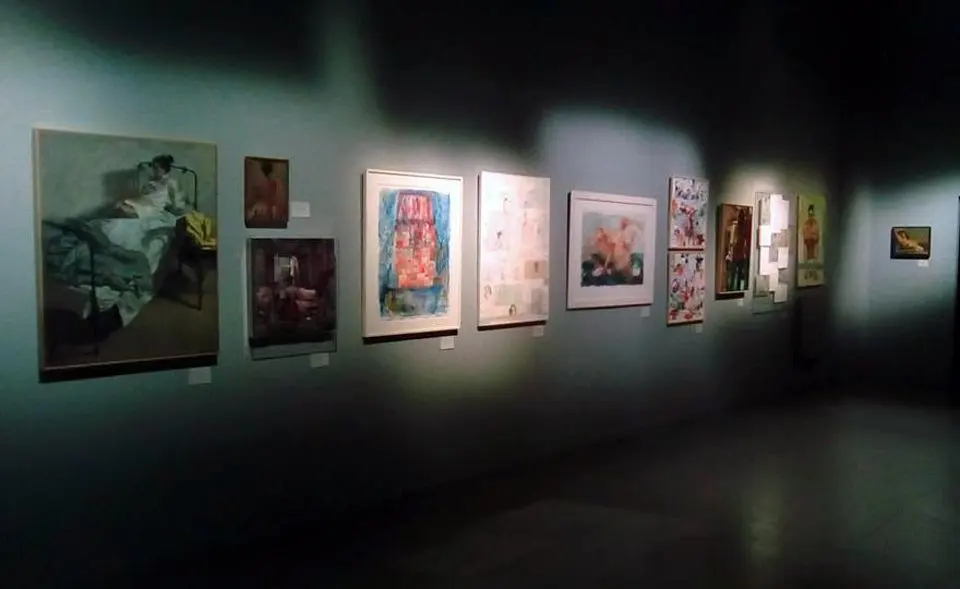
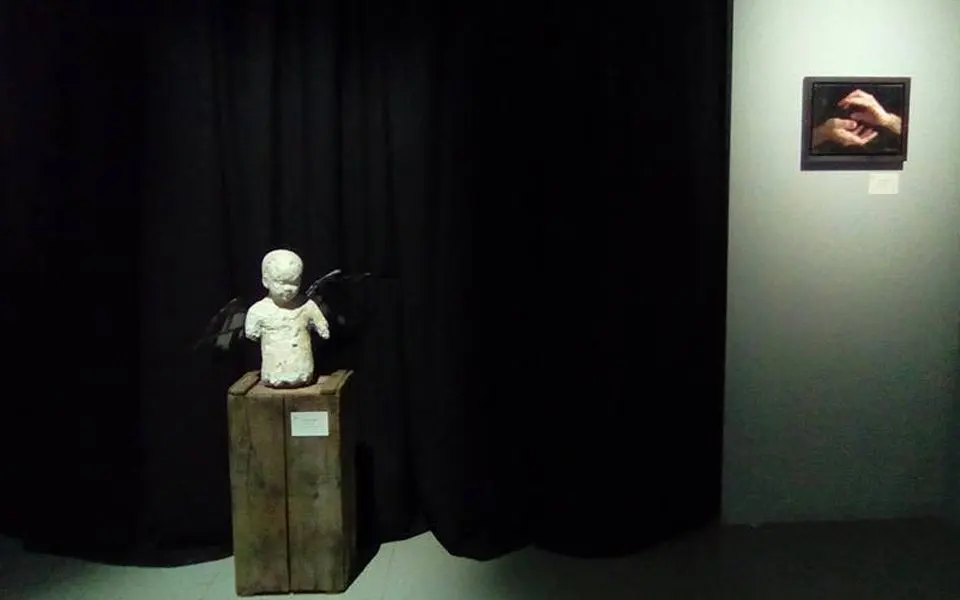
Distinguished and younger Greek artists contributed to its conception and realisation, creating new works or proposing favourite earlier ones from their own or other collections. Paintings, sculptures and constructions, drawing at times on prose and poetry, history, opera and cinema, and at others articulating a precious personal or family narrative in visual form, tell small stories of heroic loves and amorous heroes, speaking of the “self” and the “other” in the most thrilling and most enduring of human adventures.
An adventure of joy and sorrow, anticipation and desire, pleasure and pain, lack and surfeit.
Of the indelible traces of a stolen night and the first awakening of a blissful morning.
Of the “early” of this world.
Of the “late” of all that went unsaid.
Iris Kritikou
Curator of the exhibition
1. Gabriel García Márquez, Of Love and Other Demons, Greek translation by Klaiti Sotiriadou, Livanis, 1994.
2. Sappho, reconstruction and rendering with 11 transparencies by Odysseas Elytis,
edited by Odysseas Elytis, Ikaros, 1996.
3. See also “Poetry and Love”, Proceedings of the 20th Poetry Symposium, University of Patras, 29/6–2/7/2006.